
By: Kim Leonberger, Plant Pathology Extension Associate, and Nicole Gauthier, Plant Pathology Extension Specialist
Early blight and Septoria leaf spot are the most common diseases of tomato in Kentucky. Tomatoes produced in greenhouses and high tunnels may also experience disease. These diseases may occur individually or together. While these diseases rarely result in plant death, the damage caused to leaves and fruit impacts overall yield and produce quality. Cultural and sanitation practices can help reduce severity of these diseases, but chemical management may be needed to protect plants from infection.
Early Blight Facts
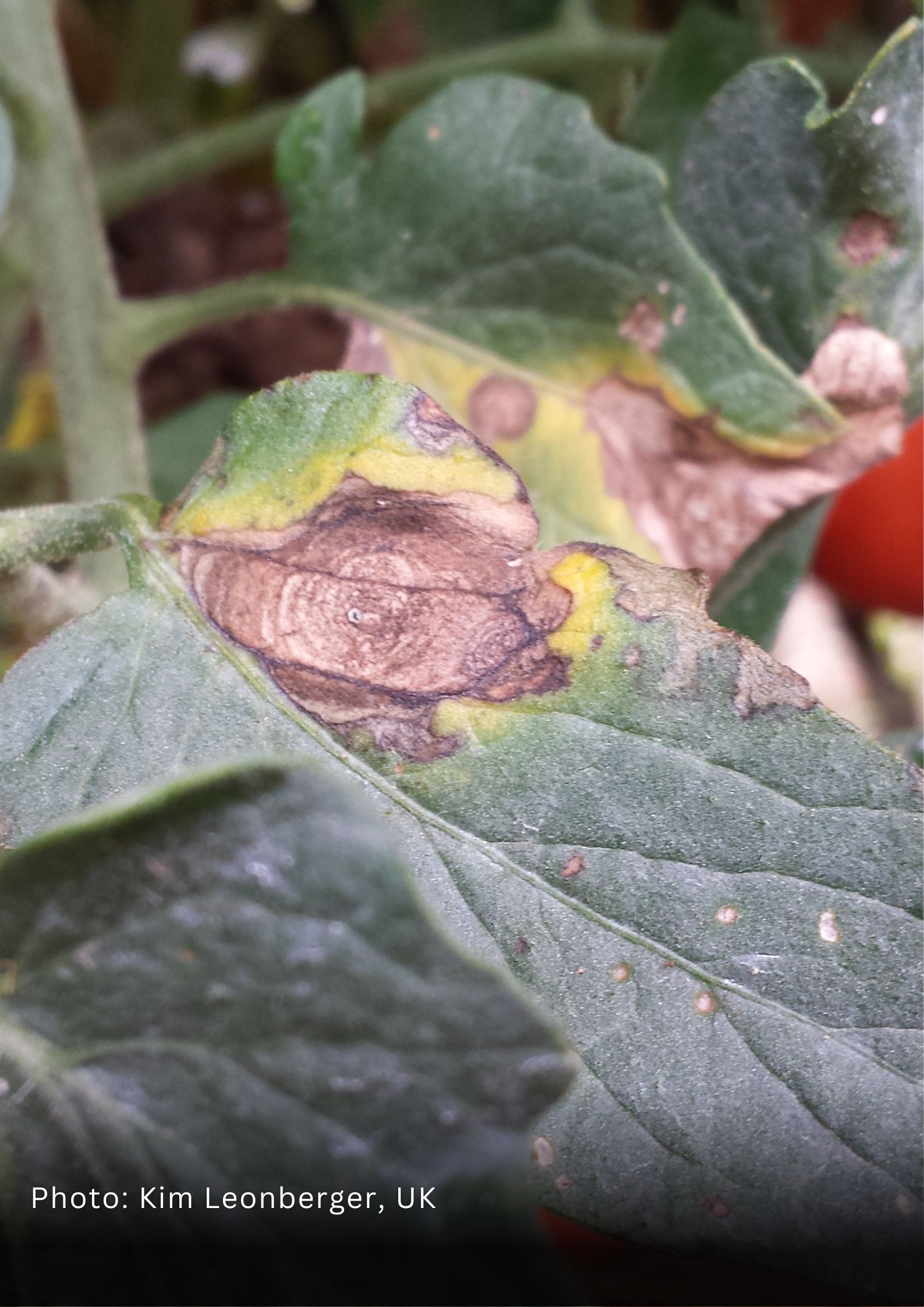
- Symptoms first appear on older leaves as small, brown lesions, which over time expand and develop a concentric ring (bulls-eye) pattern (Figure 1). Disease spreads upward and lesions develop on newer growth as disease progresses. Lesions may merge together resulting in a rapid dieback of plant tissue. Fruit may also become infected. Affected fruit develop dark, brown to black lesions with concentric ring patterns near the stem attachment point (Figure 2).
- Disease overwinters in plant debris left over from the previous season.
- Early blight spreads when spores are carried by water, such as irrigation and rain splash.
- Warm, wet conditions and periods of high humidity favor disease development.
- Early blight is caused by the fungal pathogen Alternaria linariae, , which can infect other solanaceous hosts and some cucurbits.


Septoria Leaf Spot Facts
- Symptoms first appear as small circular lesions with tan-brown centers on older leaves (Figure 3) and lower portions of stems. Over time disease progresses up the plant to new growth. As disease spreads, leaves may begin to die back rapidly. However, individually, lesions can still be observed. During periods of high humidity, small, black reproductive structures may be seen in centers of spots. Septoria leaf spot does not affect fruit.
- Disease overwinters in plant debris left from the previous season.
- Septoria leaf spot is spread by water, such as irrigation and rain.
- Warm, wet conditions and periods of high humidity favor disease development.
- Septoria leaf spot is caused by the fungal pathogen Septoria lycopersici, which can also infect a wide range of solanaceous hosts.

Management
- Purchase certified disease-free seeds or transplants
- Utilize cultivars with resistance or tolerance to diseases
- Manage weeds in and near plantings, especially nightshades and other solanaceous weeds
- Rotate crops
- Increase plant spacing
- Apply mulch layer
- Remove and destroy infected plants or plant parts
- Avoid overhead watering
- Clean and sanitize tools, pots, and equipment
- Remove and destroy plant debris at the end of the season
Commercial growers can find information on fungicides in the Vegetable Production Guide for Commercial Growers (ID-36) and the Southeastern U.S. Vegetable Crop Handbook (SEVEW). Homeowners should consult Home Vegetable Gardening (ID-128) for fungicide information or contact a county Extension agent for additional information and recommendations regarding fungicides.
Additional Resources
- IPM Scouting Guide for Common Pests of Solanaceous Crops in Kentucky (ID-172)
- Sustainable Disease Management of Solanaceous Crops in the Home Garden (PPFS-VG-21)
- Home Vegetable Gardening (ID-128)
- Vegetable Production Guide for Commercial Growers (ID-36)
- Southeastern U.S. Vegetable Crop Handbook (SEVEW)
- Managing Greenhouse & High Tunnel Environments to Reduce Plant Diseases (PPFS-GH-1)
- Greenhouse Sanitation (PPFS-GH-4)
Leave a Reply